
Wellbeing
What Causes Persistent Headaches? When Should You See a Doctor?
Lavamozu Health Editorial · Sep 16, 2026 · 10 min read
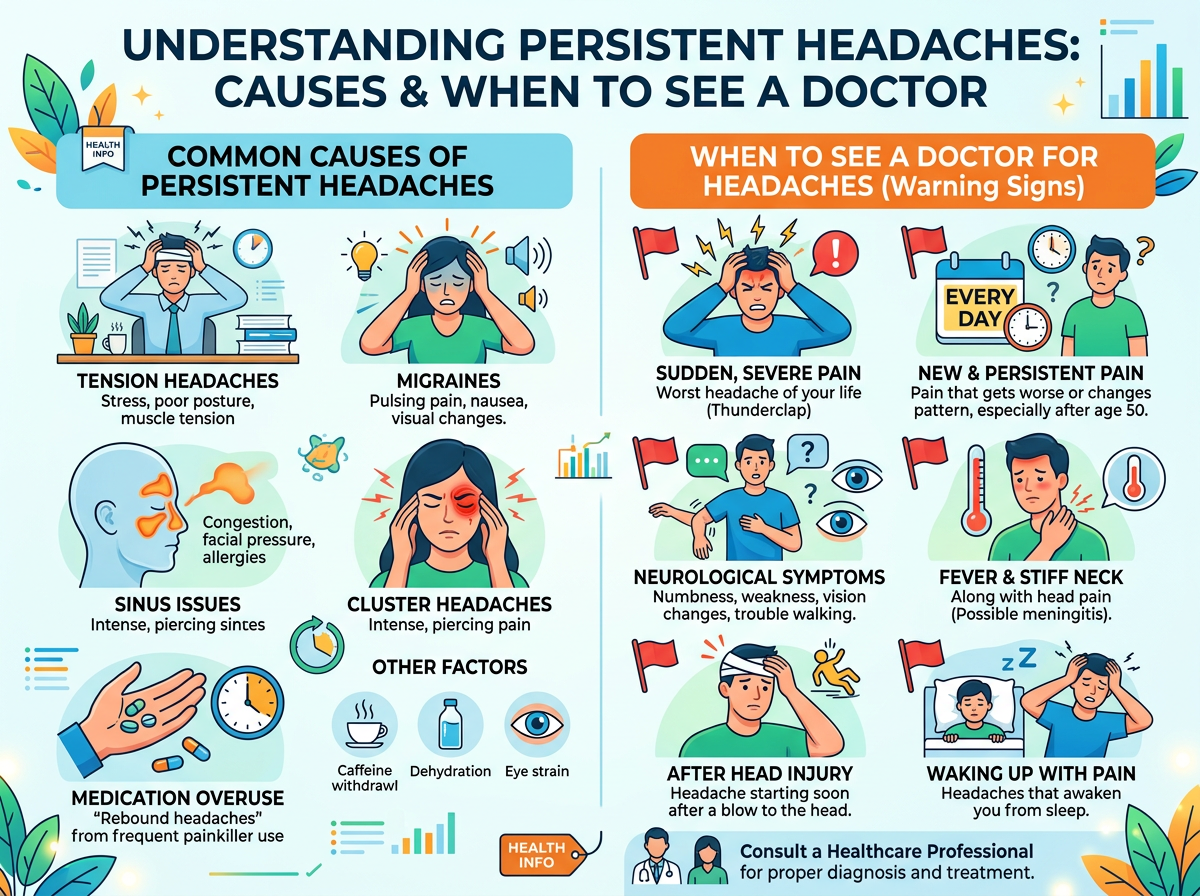
What Causes Persistent Headaches? When Should You See a Doctor?
A headache is something almost everyone experiences at some point. Sometimes it is a temporary discomfort after a stressful day, a poor night's sleep, dehydration, or too much time staring at a screen. It may improve after rest, food, fluids, or appropriate treatment.
But what happens when the headache keeps coming back?
Or when you wake up with a headache several days in a row?
Or when a headache that used to be mild suddenly becomes more frequent, more severe, or different from what you normally experience?
A persistent or recurring headache should not automatically be assumed to be "just stress." Headaches have many possible causes, and while most are not caused by a life-threatening condition, some patterns require medical assessment.
Headache disorders are among the most common neurological conditions worldwide. The World Health Organization estimates that headache disorders affected about 40% of the world's population in 2021. Migraine, tension-type headache, and cluster headache are among the major primary headache disorders, while headaches can also occur because of another underlying condition.
This guide explains common causes of persistent headaches, the differences between some common headache types, warning signs that should not be ignored, and when it is appropriate to speak with a healthcare professional.
Important: This article is for general health education. A headache cannot be diagnosed reliably from an article alone. If your symptoms are severe, unusual, worsening, or accompanied by warning signs, seek appropriate medical care.
What is a persistent headache?
There is no single type of headache called a "persistent headache."
The phrase generally describes a headache that lasts longer than expected, keeps returning, becomes increasingly frequent, or does not respond as it normally would to appropriate measures.
For one person, this might mean a headache that has continued for several days. For another, it may mean headaches occurring repeatedly over weeks or months.
The pattern matters.
A healthcare professional may want to know:
When did the headaches begin? How often do they occur? How long does each episode last? Where exactly does the pain occur? Is the pain throbbing, pressing, stabbing, or tightening? How severe is it? Does physical activity make it worse? Do you experience nausea or vomiting? Are you sensitive to light or sound? Have you noticed changes in your vision? Are you taking pain medicines frequently? Have there been recent changes in your sleep, stress, diet, medications, or general health?
These details can help distinguish different types of headache and determine whether further assessment is needed.
Common causes of persistent or recurring headaches 1. Tension-type headaches
Tension-type headaches are among the most common forms of headache.
They are often described as pressure, tightness, or a dull ache rather than the strong pulsating sensation some people associate with migraine. The discomfort may occur on both sides of the head and can sometimes involve the neck.
Stress and muscle tension can contribute to this type of headache, although headaches are not always as simple as saying "stress caused it."
Poor sleep, prolonged periods in one position, physical tension around the neck and shoulders, and other factors may also contribute.
If headaches repeatedly occur during demanding periods of work or study, keeping a record of when they happen may help reveal patterns.
- Migraine
Migraine is more than simply having a "bad headache."
A migraine attack can involve a moderate to severe headache, often with nausea and/or sensitivity to light and sound. The pain may be one-sided and pulsating, and physical activity can make it worse. Some people experience an aura before or during an attack, which may include temporary visual or sensory symptoms.
Migraine can interfere significantly with work, family life, and everyday activities.
It is also possible for someone to have a migraine without recognizing that their recurring headaches are actually migraine attacks.
A healthcare professional can help determine whether your symptoms fit migraine or another headache disorder.
- Dehydration and inadequate fluid intake
Not drinking enough fluids can contribute to headaches, particularly when combined with heat, sweating, vomiting, diarrhea, or prolonged physical activity.
However, dehydration should not automatically be assumed to be the explanation for a recurring headache.
If headaches continue despite adequate hydration, or if they are becoming more frequent or severe, it is worth looking for other possible causes.
- Poor or disrupted sleep
Sleep and headaches can influence one another.
Insufficient sleep, irregular sleep schedules, and disrupted sleep may contribute to headaches in some people. At the same time, recurring headaches can make it harder to sleep properly.
If you repeatedly wake with headaches, particularly if the pattern is new, persistent, or accompanied by other symptoms, discuss it with a healthcare professional rather than simply taking pain medication every morning.
- Stress and mental strain
Stress can contribute to headaches, particularly tension-type headaches.
But there is an important distinction between saying that stress may contribute to a headache and assuming that every persistent headache is caused by stress.
If someone repeatedly experiences headaches, it is worth considering sleep, hydration, medications, migraine, vision problems, and other possible contributors rather than automatically attributing everything to stress.
- Medication-overuse headache
This is one of the less obvious causes of recurring headaches.
A person may begin taking pain medication because of occasional headaches. If the headaches become more frequent, they may respond by taking the medication more often.
Over time, frequent use of headache medicines can itself contribute to medication-overuse headache.
The WHO identifies medication-overuse headache as the most common secondary headache disorder.
This does not mean that you should stop prescribed medication on your own.
If you are taking painkillers or other headache medicines regularly because you keep getting headaches, speak with a healthcare professional about the pattern. The solution may involve addressing the underlying headache disorder rather than repeatedly treating each episode.
- Other medical conditions
Headache can sometimes occur alongside another medical problem.
The possibilities are broad, which is why diagnosing yourself based on the location or sensation of pain is unreliable.
A headache may occur with infections, neurological conditions, problems affecting the eyes, or other conditions. In some cases, the headache may be an important warning sign rather than the main illness itself.
That is particularly important when a headache is new, unusually severe, rapidly worsening, or accompanied by neurological or systemic symptoms.
Where does your headache hurt?
People often search for phrases such as "headache on the left side," "headache behind the eyes" or "headache at the back of the head."
The location can provide useful information, but it does not provide a diagnosis by itself.
For example, migraine can commonly produce one-sided pain, while tension-type headaches are often felt on both sides or as pressure around the head. Other headache disorders can have different patterns.
This is why it is better to consider the entire pattern:
Location + severity + duration + frequency + associated symptoms + triggers + medical history
rather than focusing on location alone.
When is a headache an emergency?
Most headaches are not medical emergencies.
However, some headache patterns require urgent assessment.
Seek emergency medical care if you have a headache: Starts suddenly and is extremely severe, particularly if it reaches maximum intensity very quickly. Is described as the worst or most severe headache you have experienced. Occurs with confusion, fainting, seizures, or a significant change in consciousness. Occurs with weakness or numbness, particularly on one side of the body. Causes difficulty speaking or understanding speech. Occurs with new problems with vision, balance, or walking. Occurs with a stiff neck and fever. Occurs with a new rash alongside fever or other concerning symptoms. Develops after a significant head injury. Is accompanied by other severe or unusual neurological symptoms.
These warning signs can sometimes occur with serious conditions, including stroke, meningitis or bleeding around the brain. A sudden, extremely severe headache is particularly important because certain brain emergencies can present this way.
Do not wait for a routine appointment when a headache is accompanied by serious warning signs. Seek urgent medical attention.
When should you make a doctor's appointment?
Even when there are no emergency symptoms, recurring headaches deserve attention when they are interfering with your life.
Consider speaking with a healthcare professional if:
Your headaches are becoming more frequent. They are becoming more severe. Your usual headache pattern has changed. Headaches keep returning despite appropriate self-care. The headaches interfere with work, school, sleep, or normal activities. You regularly need pain medication to function. You are unsure what is causing the headaches. You have developed a new type of headache. You have other symptoms that concern you.
Mayo Clinic similarly recommends medical assessment when headaches occur more often than usual, become more severe, worsen despite appropriate over-the-counter treatment, or interfere with daily activities.
Why you should not keep treating every headache yourself
It is understandable to reach for a painkiller when your head hurts.
For an occasional, familiar headache, appropriate over-the-counter treatment may be reasonable for many people.
The problem arises when medication becomes the routine response to a headache that keeps returning.
If you find yourself thinking:
"I need another painkiller because this headache keeps coming back."
it may be time to investigate the underlying pattern.
Frequent use of headache medicines can contribute to medication-overuse headache, creating a cycle in which headaches become increasingly difficult to manage.
That is why persistent headaches should be assessed rather than repeatedly masked.
What can you do while keeping track of your headaches?
One of the simplest things you can do is keep a headache diary.
You do not need a complicated medical application. A notebook or phone note can be enough.
Record:
Date: When did the headache begin?
Duration: How long did it last?
Location: Where did you feel the pain?
Intensity: How severe was it?
Associated symptoms: Nausea? Vomiting? Light sensitivity? Vision changes? Dizziness? Other symptoms?
Possible triggers: Poor sleep? Stress? Missed meals? Heat? Exercise? Menstruation? Particular foods? Long screen time?
Medication: What did you take, if anything, and did it help?
Over time, this information can help you and your healthcare professional identify patterns.
The WHO also recommends headache calendars as one useful part of managing headache disorders and identifying triggers.
Can lifestyle changes help headaches?
Depending on the type and cause of the headache, lifestyle measures may help reduce attacks.
Useful habits can include:
Maintaining a regular sleep schedule. Drinking enough fluids. Eating regular, balanced meals. Stay physically active as appropriate for your health. Identifying individual headache triggers. Managing stress. Avoiding excessive use of headache medicines. Keeping a record of recurring headaches.
These measures are not substitutes for medical evaluation when one is needed. They are part of a broader approach to headache management.
Headaches in Nigeria: why proper assessment matters
Headache is not a new or unusual complaint in Nigeria.
A community-based study conducted in Nigeria and published in the medical literature found that 51% of the people surveyed had experienced at least one episode of headache in their lifetime, while migraine was identified in 5.3% of the population studied. The study was conducted decades ago, so its prevalence figures should not be treated as a current national estimate, but it demonstrates that headache has long been a significant health complaint in Nigerian communities.
Today, the bigger challenge is not simply recognizing that headaches are common.
It is recognizing when a recurring headache needs proper assessment.
A headache that happens occasionally and follows a familiar pattern may be very different from a headache that is new, progressively worsening, or associated with neurological symptoms.
Frequently asked questions about persistent headaches Why do I keep getting headaches every day?
There are many possible explanations, including primary headache disorders such as migraine or tension-type headache, medication overuse, and other medical conditions. Daily or near-daily headaches should be assessed rather than assumed to be caused by stress or dehydration.
What causes a headache that won't go away?
A prolonged headache can have several causes. The duration alone does not identify the cause. A healthcare professional may need to consider the headache's characteristics, associated symptoms, medication use, medical history and other factors.
If the headache is severe, sudden, worsening, or accompanied by neurological symptoms, seek urgent medical attention.
Is a headache every day normal?
Frequent headaches should not simply be accepted as normal. Some chronic headache disorders exist, but frequent headaches can also be associated with medication overuse or other problems. If headaches are occurring regularly, professional assessment can help determine what is happening.
Can stress cause headaches?
Stress can contribute to headaches, particularly tension-type headaches. However, recurring headaches should not automatically be blamed on stress. Other possible causes should be considered when the headaches persist or change.
Can taking painkillers too often cause headaches?
Yes. Frequent use of medicines used to treat headaches can contribute to medication-overuse headache. If you regularly need headache medication, speak with a healthcare professional rather than continually increasing or repeating treatment on your own.
When should I worry about a headache?
A sudden, extremely severe headache or a headache accompanied by symptoms such as weakness, numbness, difficulty speaking, confusion, seizure, fainting, stiff neck, fever, significant vision changes, or a recent head injury requires urgent medical assessment.
The bottom line
A headache does not always mean something is seriously wrong.
But a persistent or recurring headache deserves more attention than simply taking another painkiller and hoping it disappears.
Pay attention to the pattern.
If your headaches are becoming more frequent, more severe, interfering with your everyday life, or different from what you normally experience, talk to a healthcare professional.
And if a headache is sudden and extremely severe or accompanied by serious neurological or other warning symptoms, seek emergency medical care immediately.
Your headache is a symptom. Understanding why it keeps happening is often more useful than repeatedly trying to silence the pain.
Need professional guidance?
If you're experiencing recurring or concerning symptoms, Lavamozu Health is being developed to make it easier to connect people with appropriate healthcare professionals.
Find a Specialist | Book Care
This article is provided for general health education and does not replace diagnosis, treatment, or advice from a qualified healthcare professional. If you have severe or emergency symptoms, seek urgent medical attention.